 tania-sari
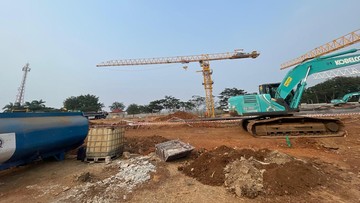
Gubernur Jawa Barat Dedi MulyadiPwoliciesapaan officially Voluntarily Assessing the cancellation of the development of a data center or artificial intelligence-based data center in the Jatiluhur area, Kabupaten Purwakarta. The governor confirmed the decision when explaining that the project, which had begun to enter the construction stage, was halted because the required permits and legal foundations had not been fully completed. According to Dedi Mulyadi, the cessation was taken as a form of attention to the welfare of the local community, particularly regarding the clean water supply for residents in the surrounding areas.
The data center project with the initials BDX is located in the Jatiluhur area, namely in the territory of Kabupaten Purwakarta which borders the northwestern side of West Java. Its presence had initially triggered public attention because data centers of the artificial intelligence scale are known to require large amounts of water for the cooling process of the servers. The issue of water supply became the central point in the debate over the construction of the facility.
“Kami memutuskan untuk menghentikan sementara proyek pusat data di Jatiluhur karena perizinannya belum lengkap. Kepentingan masyarakat, terutamaregarding air supply for the residents, must be placed first,” emphatically stated Dedi Mulyadi.
License and Rules became the Main Reason
In the explanation, Dedi Mulyadi asserted that the foundation of every development activity must be a complete permit. According to him, a large-scale investment project that utilizes significant land areas and natural resources cannot be carried out on the basis of preliminary agreements alone. The governor emphasized that the administration would not allow any project to proceed while the legal instruments were still incomplete.
He also conveyed that the West Java government had instructed the relevant regional apparatus to conduct a thorough review of the permits belonging to the data center project. The review covers aspects of land use, environmental management, and other technical requirements attached to the construction of data center facilities. Dedi Mulyadi stated that the review was intended to ensure that the project did not ignore the interests of the local community.
“Based on the applicable regulations, a project of this scale must meet various requirements. If they are not yet fulfilled, then the proper step is to complete the requirements, not to continue construction,”Asserted Dedi Mulyadi.
Water Supply became the Point of Attention
The attention to the clean water supply in the Jatiluhur area is not a new issue. The area, which is known as a rice barn and irrigation area, has long been dependent on the water management system that serves agricultural lands and settlements. The presence of a data center requiring high water consumption is considered capable of putting pressure on the existing supply system.
In the context of a relatively dry season, the concern regarding competition over water use becomes more real. Dedi Mulyadi emphasized that the provincial government is fully aware that clean water is a basic need that must be guaranteed for residents. For that reason, he stated that any development plan that potentially reduces the water capacity for the community will be carefully reconsidered.
The governor also conveyed that the decision to stop the project did not mean rejecting the investment plan itself. He explained that if the project owner is willing to complete all administrative and environmental requirements, and is able to guarantee that there is no negative impact on water supply for the residents, then the discussion could be continued. However, the process must be carried out in an orderly and transparent manner.
Coordination and Follow-up Steps
Dedi Mulyadi stated that the provincial government had coordinated with thederivative executing apparatus and had also had intensive communication with the project owner. He acknowledged that the cessation of the project would certainly have financial consequences for the investors, but emphasized that the government’s stance remained unchanged, namely prioritizing the public interest.
Furthermore, he explained that the lessons learned from this case should be used as a consideration for the entry of any future strategic projects. According to him, the presence of investors and large projects is important for boosting the regional economy, but it must be balanced with the readiness of infrastructure and the preservation of the quality of life of the people.
As a follow-up, the West Java government is expected to reconfirm the status of the permits and conduct a comprehensive evaluation of the data center project in Jatiluhur. If the requirements are found to be incomplete or if there are indications of a threat to the water supply, the project will not be continued in its current form.
Reactions from the Surrounding Community
The decision to stop the construction was welcomed by a number of residents who had been observing the project with concern. Several community figures in the Jatiluhur area stated that the water supply for households and agricultural irrigation had been a central issue in their discussions ever since the project plan began circulating. They considered that the temporary cessation of the construction provided breathing room for the government and the community to discuss the issue thoroughly.
On the other hand, the cessation of the project also opened questions regarding the certainty of investment. Some observers noted that the process of completing the permits could take a relatively long time, and that clarity is needed for all parties, both the government and the project owner. However, the emphasis remains that the licensing and environmental aspects must be resolved first.
With this decision, Dedi Mulyadi has once again placed the principle of public welfare above the rush of development. The case of the artificial intelligence data center in Jatiluhur is expected to become a reference in the management of strategic projects in West Java, particularly in relation to the integration of permits, environmental balance, and the availability of clean water for the community.


:strip_icc():format(webp)/kly-media-production/medias/4630588/original/050223000_1698748931-20230912_003045.jpg)
:strip_icc():format(webp)/kly-media-production/medias/9365815/original/072809400_1791196446-121182.jpg)

:strip_icc():format(webp)/kly-media-production/medias/9359724/original/058367200_1790571883-88e2d017-3d38-4e48-8cc3-81f487177601.jpg)


Comments (0)