 putri-anggraini
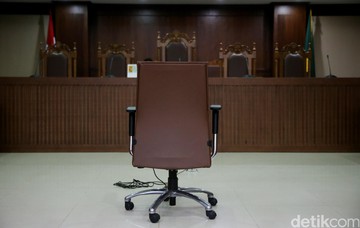
Pansus Dewan Perwakilan Rakyat RI concatenated member ofAliasTERN testifies that the fee acceleration for congregants of the-organized pilgrimage has been returned to the travel service provider (travel). The statement was conveyed by a former staffer of Himpuh in a meeting with the Pansus on the issues of Umrah and Hajj, held at the Parliament building, Senayan, Jakarta.
According to him, the repayment of the acceleration fee of USD 4,000 per congregant has been channeled to the administering of the Special Hajj Organizer (PIHK) since approximately two months prior. The information, according to him, was obtained from the parties that arranged the payment, and was disclosed following the entry of travel industry organizations into the scope of the panel's tracing.
In the explanation, the witness said that the acceleration fee was originally attached to the waiting list of congregants who had completed the administration stage, while the service was offered by travel through a third party. According to the mechanism, the fee was paid before the congregant departed for the holy land, and after the congregation became crowded, the travel organization decided to return the money to the administering of the Special Hajj Organizer, who bears the cost of the whole trip to the Hajj journey.
"Uang empat ribu dolar itu sudah dikembalikan ke-travel. Yang“二 hari di-menteng hari"," kata mobility.
Difference in the Flow of Refunds and Liability
The witness emphasized that the return of the fee to the PIHK is important because the person who holds the obligation to the congregant is the travel service provider, not the administering of the Special Hajj Organizer. The travel service provider is a separate entity from the PIHK, even though both operate in the same service chain, which is the Umrah and Hajj services using a private scheme.
Based on that flow, according to the witness, if there is a dispute regarding the acceleration fee, the load of returning the money falls on the travel service provider. The PIHK, which only carries out the implementation of the worship journey, is positioned as a party that has already received the return of the payment, and is not a party that is responsible for the acceleration fee in question.
The statement adds strength to the doubts that have emerged regarding the transparency of the implementation of the acceleration fee, especially regarding the criteria for determining who may be called a priority congregation and who has the right to receive the facility. The witness did not reveal the mechanism used by the travel service provider in sorting the acceleration congregation, and stated that the selection was carried out based on the availability of quota slots at a certain period.
Pansus Extends Tracing Range
With this information, the Pansus is expected to expand the tracing range to include the travel service provider that manages the payment of the acceleration fee, in addition to the PIHK. The question that arises is whether the returning of the fee to the PIHK has been accompanied by a complete settlement of the disputes that have arisen in the field.
In a meeting with the commission, it was conveyed that the commission is trying to map the flow of money from the congregation to the travel service provider and the PIHK, including the period when the acceleration fee was applied and the parties that benefited from it. The commission also emphasized that the return of the money does not automatically close the case, because the issue of whether the acceleration mechanism is permitted under the applicable rules still needs to be clarified.
The commission stated that the applicable regulation does not give authority to any private entity to impose an acceleration fee in the context of the Hajj journey administered by a private scheme. The examining party is relying on the principle that any levy imposed on the congregation must be based on a rule that is known in advance and set forth in writing, and may not be placed unilaterally.
Protection of Congregants and Supervision
The case of the acceleration fee that has been returned to the travel service provider is a recurring pattern in the complaints of Umrah and Hajj congregants. In many cases, the complaint is raised after the congregation has departed, or after the travel document has been issued, so that the position of the congregation is in a weaker position to negotiate the return of the money.
The witness stated that the return of the USD 4,000 per congregation was carried out gradually, and not all congregations received the same information. He also stated that the travel service provider asked the congregation not to continue the dispute because the money had been returned, and stated that the return of the money was the end of the matter.
The Pansus affirmed that it will continue to listen to statements from various parties, including the travel service provider, the PIHK, the congregation, and the ministry in charge of religious affairs. The commission stated that the next step is to establish the transparency of the return process, including the number of congregations who received the return of the fee, the method of return, and the parties that supervised the return.
Separately, the commission is preparing a recommendation regarding the supervision of the implementation of the Umrah and Hajj services by private entities, including the provision of a written and open scheme regarding the acceleration facility, so that the congregation can understand the costs and rights attached to the facility before making a decision.


:strip_icc():format(webp)/kly-media-production/medias/4642305/original/037370100_1699532379-WhatsApp_Image_2023-11-09_at_18.48.57.jpeg)
:strip_icc():format(webp)/kly-media-production/medias/5480209/original/055827300_1769049427-53be1b51-4a07-4337-a7d7-3ea2480321b2.jpg)



:strip_icc():format(webp)/kly-media-production/medias/3974899/original/078241400_1648197836-20220325-FOTO---INDRA-KENZ-Herman-6.jpg)




Comments (0)