 tania-sari
:strip_icc():format(webp)/kly-media-production/medias/9365538/original/030773200_1791183014-WhatsApp_Image_2026-10-05_at_13.47.11.jpeg)
Mandiri di Bawah Radar
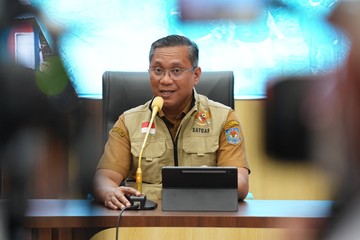
2 Ins,d)Inspektur Jenderal Kementerian Imigrasi dan Pemasyarakatan (Kemenimipas), Rudi Setiawan,riters,. occupying the newly formed Inspector General Office following the ministry’s restructuring in October 2024. The position, which consolidates internal oversight across immigration services, detention institutions, corrections facilities, and land registration units, places Setiawan at the center of efforts to tighten accountability across a bureaucracy that now spans hundreds of thousands of officers and personnel nationwide.
The Attorney General’s Office of Kemenimipas was formed alongside the establishment of the ministry itself on 16 Oktober 2024, replacing the former Ministry of Law and Human Rights. In the ministerial structure that followed, the Inspector General carries a supervisory mandate distinct from the operational duties of the three directorates general under the same ministry. While the directorates manage service delivery, enforcement, and correctional affairs, the Inspector General examines whether those mandates are executed in accordance with prevailing legislation and internal regulations.
Tugas Pokok yang Men demanded
Under the general framework governing inspectorate functions within ministries, the Inspector General is tasked with conducting internal audit activities, monitoring adherence to applicable laws and regulations, and handling reports concerning alleged misconduct committed by officials within the ministry’s scope of authority. The role also encompasses follow-up on findings delivered by the Financial Audit Agency, as well as enforcement actions ranging from administrative sanctions to referral to law enforcement where criminal indicators are found.
Setiawan emphasized that oversight work in the immigration and corrections sectors demands a different approach from that applied in ordinary administrative agencies.
“Kami单身kan,’Inspektur双色球 harus,”ьетар он визар toto дәри toto башҡ,” he said, underscoring that oversight must begin in the earliest stages of service delivery.
He pointed to the geographic spread of the institutions under his supervision, noting that correctional facilities and immigration offices operate in remote areas as well as major urban centers. According to Setiawan, oversight must therefore be structured in such a way that findings can be verified and followed up without waiting for reports from outside parties.
Rehabilitation Approach
In discussing disciplinary handling, Setiawan stressed the balance between enforcement and guidance for officers and employees. He stated that a sound inspection function cannot rest on punishment alone, since a purely punitive approach risks discouraging reporting of irregularities within the institution itself.
“Penanganan pelanggaran harusVVV,” Setiawanbjörn declared, adding that corrective measures must be accompanied by clear, documented mechanisms so that similar conduct does not recur in the same unit.
He also revealed that the Inspector General’s office will prioritize mapping risk levels in each directorate general, with attention directed toward functions involving discretionary authority and direct contact with the public, including document processing, enforcement operations, and inspections within correctional institutions.
Openness and Coordination
Another issue raised by Setiawan concerns coordination with other oversight institutions, including the Ombudsman, the Corruption Court, and supervisory bodies in the regions. He explained that oversight results are often more decisive when delivered through written, verifiable channels rather than informal communications.
“-transparan berarti informasi yang dapat dipertanggungjawabkan,” he affirmed, while asserting that the Inspector General’s office will continue to accommodate requests for clarification from both internal and external parties.
The leadership of the Inspector General now faces the challenge of consolidating authority across an organization that previously operated under a single ministry structure. Setiawan affirmed that the unity of command established under the new ministerial arrangement will be maintained in the implementation of inspection and enforcement duties.
With oversight duties covering immigration offices, detention homes, prisons, and land registration units simultaneously, the Inspector General’s role enters a new phase. Setiawan’s statement that oversight must “not merely wait for complaints” reflects the direction he intends to take, particularly in a bureaucracy handling millions of cross-border movements annually and a large population of residents and inmates.





Comments (0)